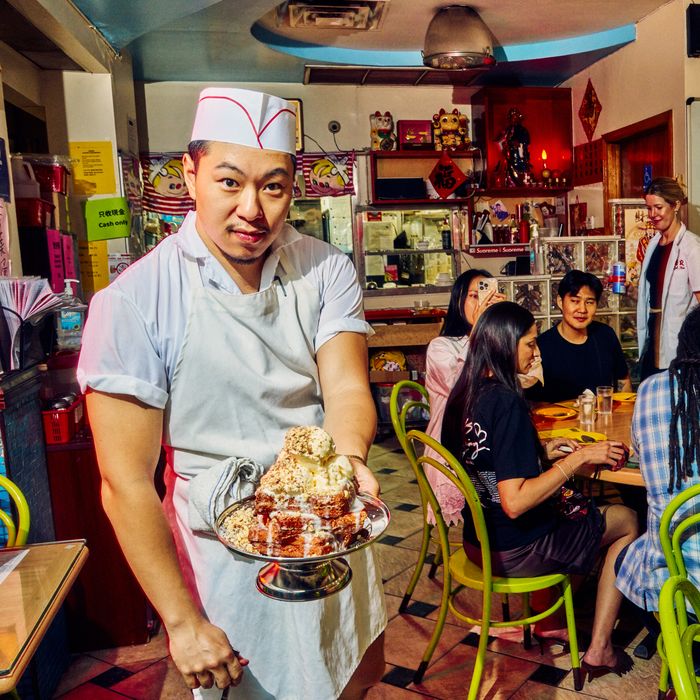
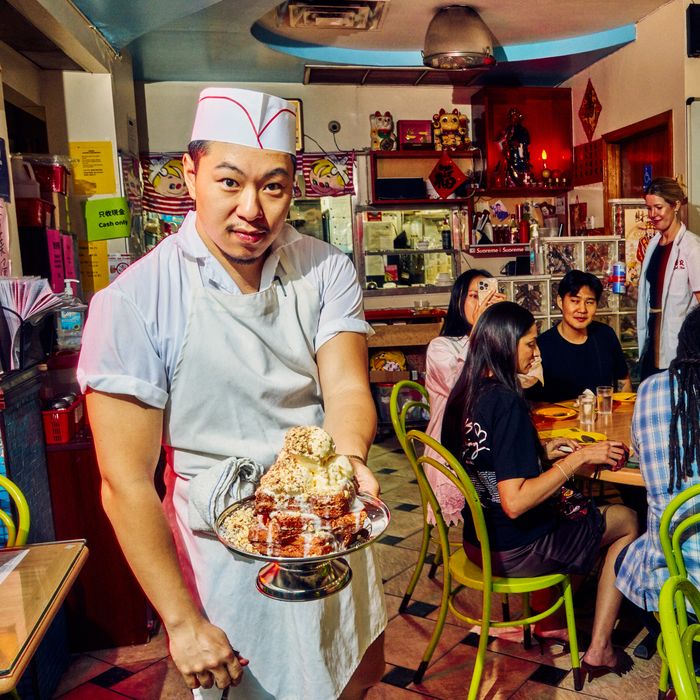
Sin with his mochi French toast inside M Star Cafe. Photo: Scott Semler
After growing up in Hong Kong, the chef Lucas Sin appeared on this city’s culinary scene in 2017 with Junzi Kitchen, a fast-casual Chinese chain with homestyle noodles he started developing during his senior year at Yale. He has hosted several popular web series (including Street Eats on YouTube) and spent time abroad researching his first cookbook, Cha Chaan Teng: Comfort Food From Hong Kong’s Iconic Diners, which will be published this fall. Coinciding with the book, he began hosting his own pop-up dinners in the city, serving dishes such as dual-sauced yin-yang fried rice, tofu-skin shrimp rolls, black-pepper brisket with potatoes in a clay pot, and mochi French toast that’s battered, deep-fried, and draped in a thick layer of condensed milk.
Sin reveres cha chaan tengs — the Hong Kong diners that are paragons of efficiency — the way any New Yorker might cherish our local greasy spoons. “Your favorite diners are ones that give you free coffee and the waitress calls you ‘hon,’ ” says Sin, sliding into a seat at M Star Cafe, the Chinatown cha chaan teng where the 150-plus-item menu features, among other dishes, breakfast congee, macaroni-and-ham soup, and baked pork chops with rice. The restaurant is also where Sin has hosted his pop-ups in the past, and it is soon to be the permanent home of Lok Kee.
Although he’s been a regular at M Star for years, he was hardly a shoo-in to become its next proprietor: Most restaurants in Chinatown are passed down familially, generation to generation. Chinese aunties caught wind that there was a Hong Kong kid walking into open restaurants and asking if anyone had leads on spaces opening up. Then a few months ago, Sin got a call from another restaurant owner asking him to “come down to meet me in two hours.”
The décor includes cerulean tiles inside, with a faded pixelated Google Map rendering of Hong Kong island across an entire wall, overlaid with caricatures of Chinese celebrities such as Jackie Chan, Yao Ming, Chow Yung-Fat, Steven Chow, and Andy Lau. (Sin can spot the building where he grew up painted onto the mural.) Sin isn’t planning to change too much. “If you take a cha chaan teng away from Chinatown, you have to give one back,” he says. That means maintaining a version of the current menu, including dim-sum mainstays including soy-braised chicken wings and M Star’s cheung fun rice rolls, as well as the yuenyeung, the mix of coffee and milk tea that is crucial to the cha chaan teng experience.
“I feel the pressure to do 150 items — otherwise, you’re not a diner.” He does want to upgrade certain sauces and spice blends, though he’ll take full advantage of canned ingredients like evaporated milk, ketchup, cream-of-chicken soup as a sauce, and Spam, all of which were first employed as cost-efficient shortcuts but are now pantry essentials for any true cha chaan teng. “Not everyone thinks cooking with ketchup is cool,” Sin says, but “this is not fine dining; it’s the most democratic stuff. I don’t think it will feel very cheffy.” He points out that the average order at a typical cha chaan teng takes the kitchen only a minute or two to prepare and customers can be in and out in 15 minutes.
There’s no set date for the handover yet. It will happen before the end of the year, Sin hopes, and he’s grateful for the unhurried pace: “Not many places will let you spend time in the restaurant before signing the lease.”
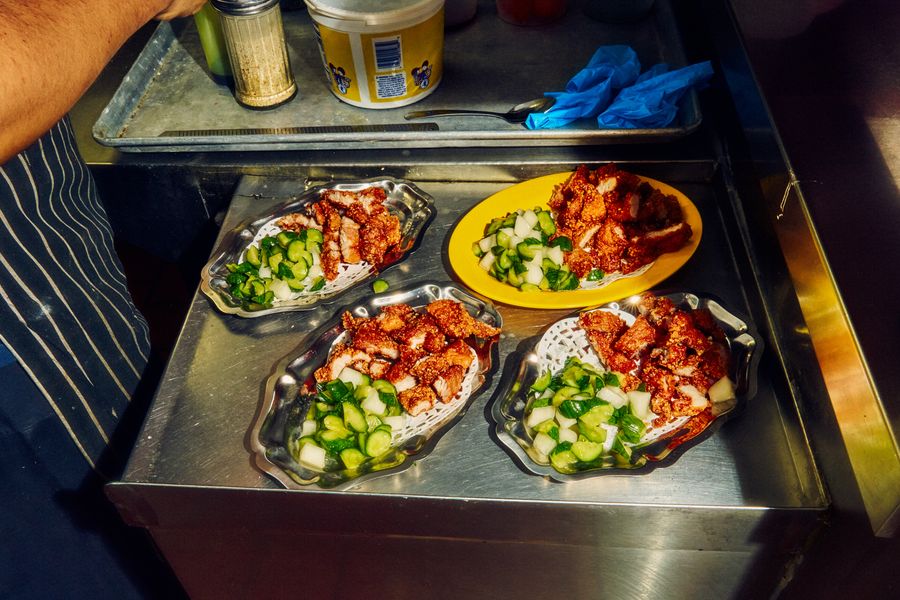
Nam Yu pork belly. Photo: Scott Semler