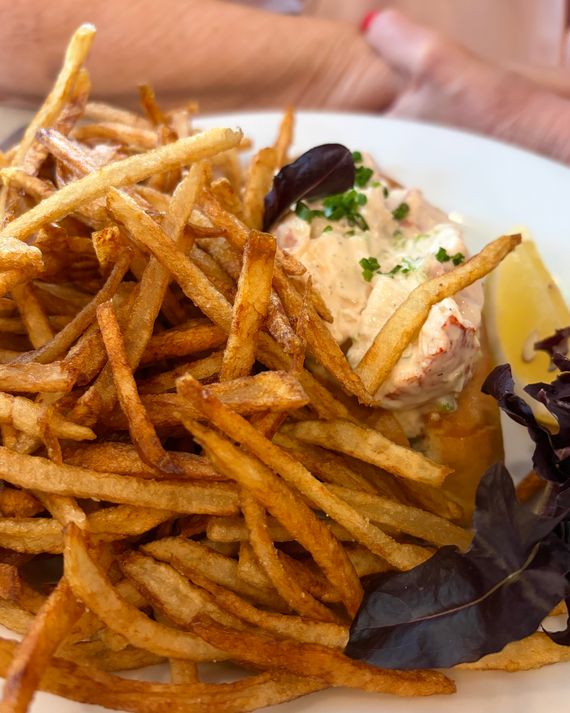
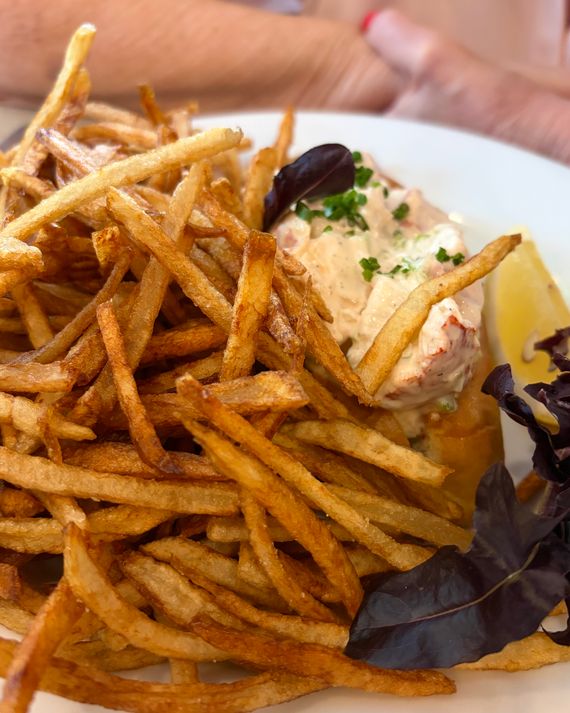
The lobster rolls still arrive under a pile of matchstick fries. Photo: Matthew Schneier
Mary’s Fish Camp was such a West Village institution that it was easy to overlook it until it was gone. Like Pearl, the nearby seafooderie from which it grew and then acrimoniously split, Mary’s soldiered on for many years after its new-kid-on-the-block status faded, supported by devoted regulars well into the second decade of the 21st century. Then that great New York City antagonist, real estate, did it in. The Mary’s building on Charles Street changed hands and, unable to come to terms with her new landlords, Mary Redding pulled up stakes in 2024. Unlike Pearl, which had closed two years before, Mary’s has returned. “For the last two and a half years, I’ve just been looking, really freaking hard,” Redding, trim and salty at 60, tells me by phone. “This is where my community is. I’ve lived in the Village for 30 years.”
Two years later, Mary’s is back in business a few blocks away, a return trumpeted by her devoted fans. (“Oh happy day,” posted former neighbor Sarah Jessica Parker.) Her deliverance came via another longtimer: the Lloves family, the proprietors of Sevilla, the 90-year-old Spanish restaurant that was her across-the-street neighbor on Charles Street, own the building. For decades, Redding had seen owner José Lloves show up and work his dining room, and he had seen her in hers. “I think we just shared the same work ethic,” she says.
So Mary’s has a new berth and, for the most part, the same everything else. Her lobster roll is still a mini-mountain of meat and mayo, her fries still matchsticks, her sweet-pea pancakes available on the side. “I’m not gonna open a chicken restaurant after two years,” she said. “I had a great product. I had a great staff. We just picked up where we left off.”
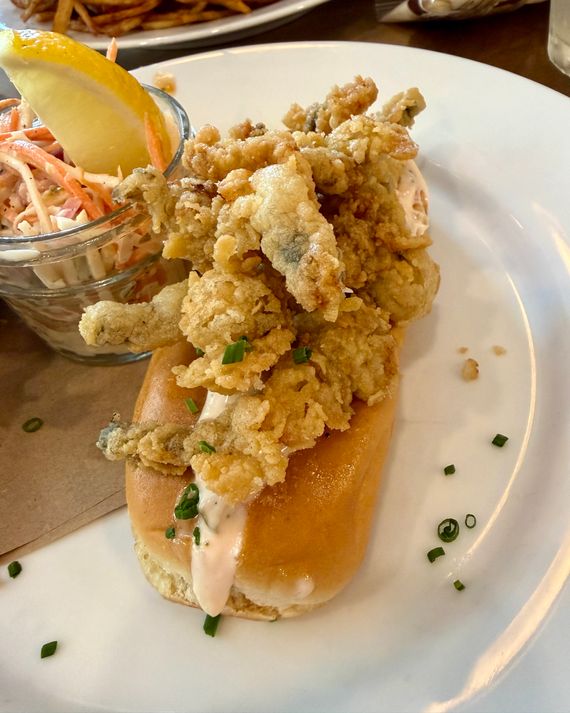
The clam roll. Photo: Matthew Schneier
I can still recommend Mary’s lobster roll, even if she might wish I didn’t. “I can’t stand the lobster roll,” she told me. “I make a great one, but you know it’s not a moneymaker.” At “market price” ($55 the afternoon I went) that may be hard to believe, but Redding insists on cooking, shelling, and assembling each roll from scratch, rather than use vacuum-sealed, pre-picked lobster meat, which makes them a time-consuming, low-margin best seller. I want to note that I enjoyed her spicy Florida lobster gazpacho — a cool, spicy cup bobbing with vermillion-red knuckles and a bargain at $16 — I loved her clam roll, slathered with celery remoulade and piled high with crisp-fried clam bellies, even more.
The afternoon I went, a spirit of old Mary’s pervaded, from the potted plants that used to make up an ad hoc garden on Charles Street to the former customers at the table, a gray-headed man clocking the MFC logo and peering through the glass door. The lobster-roll wars of the ’90s, when Redding and her compatriots battled, sometimes in court, for supremacy, are over; a new guard of roll artists like Nick Tamburo at Smithereens and Natalie Borowski’s uni-and-caviar topped version at Greenpoint’s Sailor & Siren have risen to meet the moment. But the classics still hit. “Eighty percent of my kitchen came back, and 75 percent of my servers were able to come back,” Redding says. You can still finish your meal with a peanut-brittle-topped hot-fudge sundae. Order is restored.